The Complete Quilted Cotton Fabric Buyer's Guide: Patterns, Specifications & Sourcing from China
Introduction
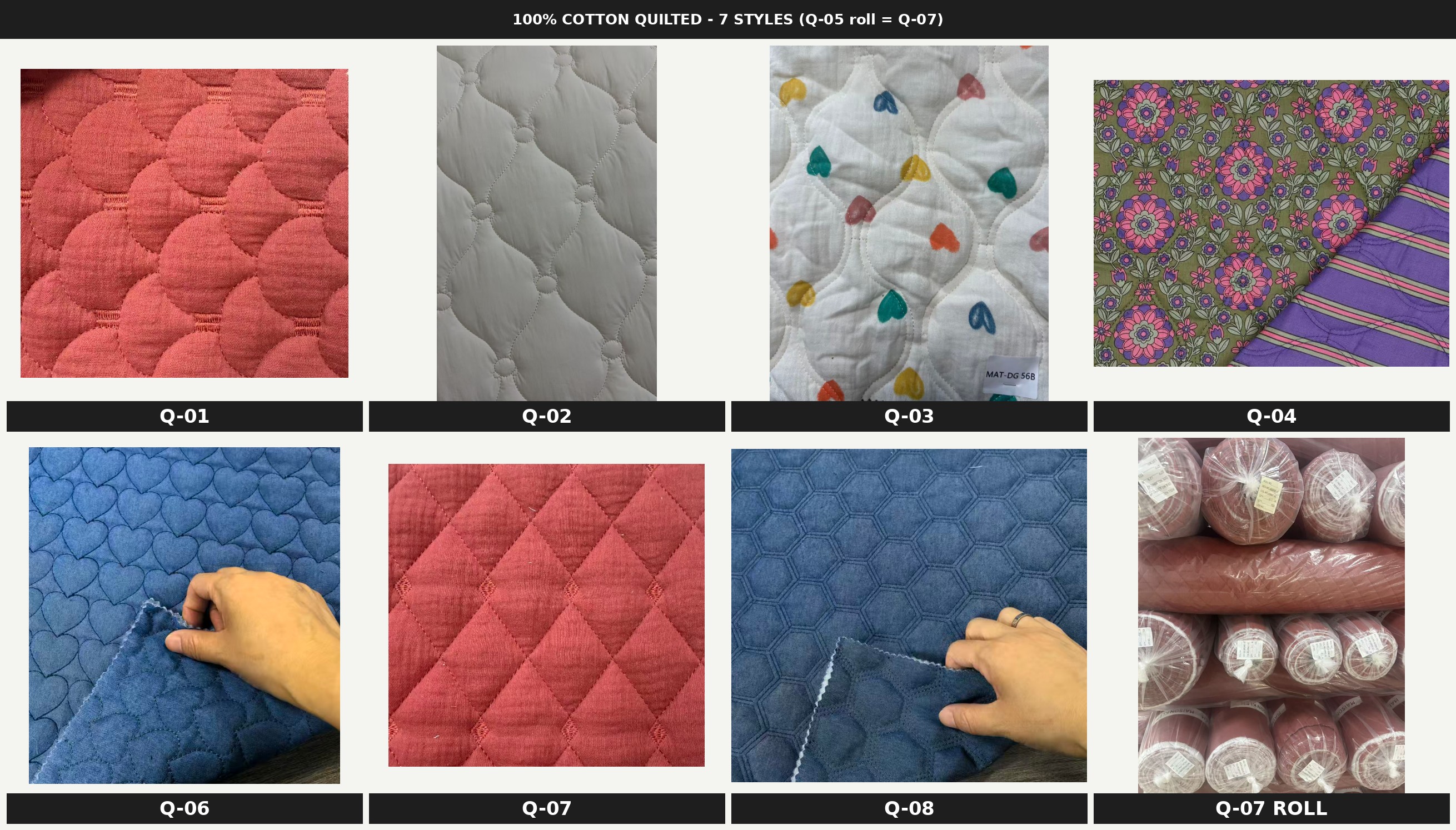
Quilted cotton fabric occupies a unique space in textiles. It's not just a fabric — it's a three-layer composite engineered for warmth, structure, and visual texture. From Uniqlo's quilted jacket liners to high-end patchwork quilts sold at Anthropologie, quilted cotton is everywhere. Yet most buyers treat it as a commodity, comparing only price per meter while missing the specifications that determine quality, comfort, and longevity.
Here's what separates successful quilted cotton buyers from those who end up with complaints: understanding the three-layer construction, choosing the right quilting pattern for the application, and specifying filling weight correctly. Get these wrong, and your "premium quilted jacket" delaminates after three washes. Get them right, and you have a product your customers keep coming back for.
This guide is written from our quilting workshop in Keqiao, where we produce seven quilting patterns daily across multiple GSM ranges. Real specifications, real FOB prices, real quality parameters — the kind of data you won't find on a supplier's Alibaba storefront.
What Is Quilted Cotton Fabric? The Three-Layer Construction
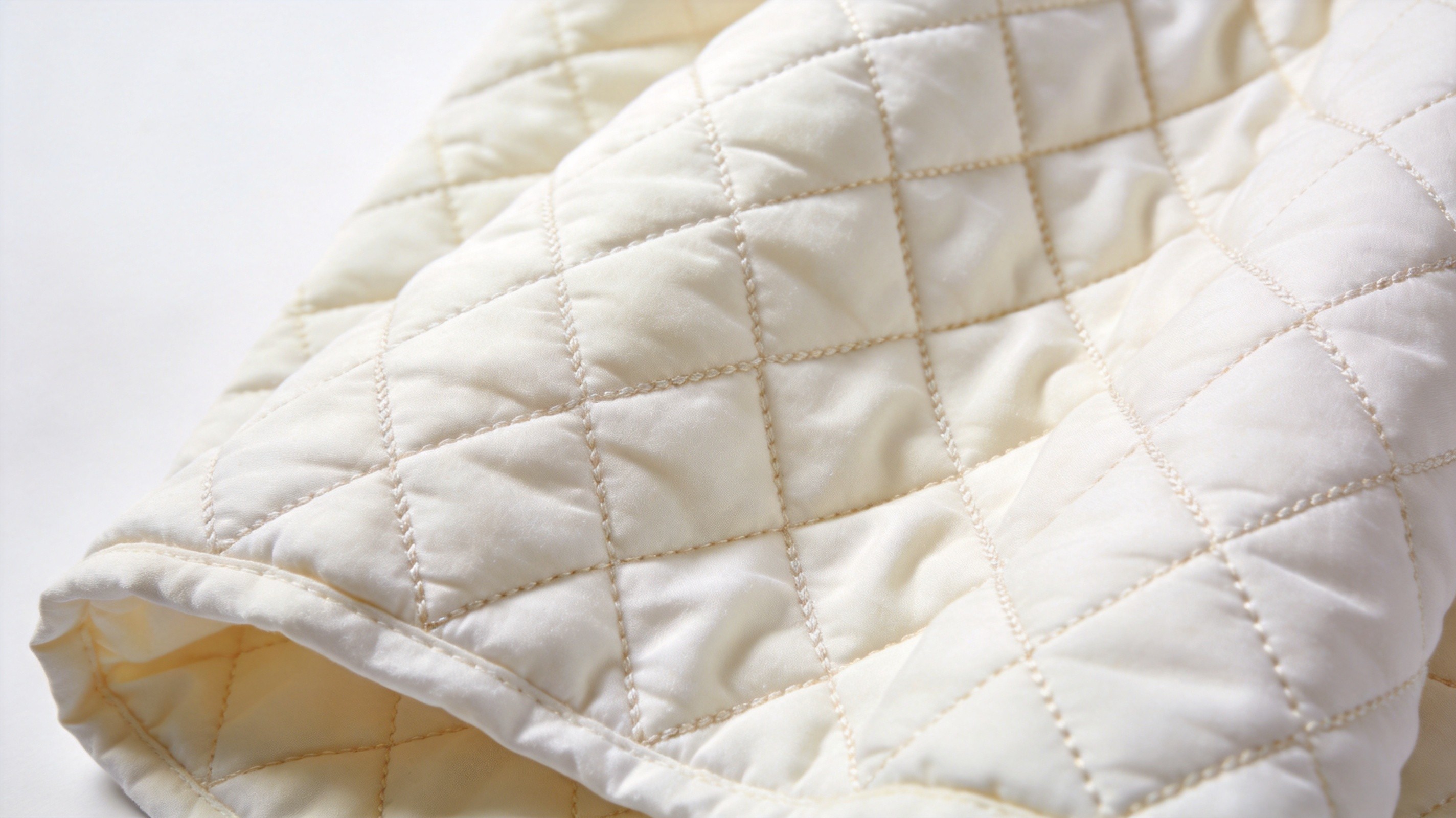
Quilted cotton fabric is a composite textile made by bonding three distinct layers together through stitching (mechanical quilting) or thermal bonding (ultrasonic or adhesive lamination). Understanding each layer is essential for specifying the right fabric for your application.
The Three Layers
| Layer | Material | Function | Typical Specifications |
|---|---|---|---|
| Top Face Fabric | 100% Cotton, cotton-poly blend, or cotton-rich | Aesthetic surface — pattern, print, color, and hand feel | 60–150 GSM, 60/60 to 40/40 yarn count, plain or twill weave |
| Middle Filling | Polyester batting, cotton wadding, or bamboo fiber | Insulation, loft, cushioning, and body | 50–300 GSM, determines warmth and thickness |
| Bottom Backing | Cotton, T/C (tetoron/cotton), or non-woven | Structural support, stability, and comfort against skin | 40–100 GSM, usually lighter than face fabric |
How the Layers Bond Together
Stitch-bonded quilting (most common): A quilting machine uses needle and thread to stitch through all three layers in a geometric pattern. The stitching itself creates the pattern — squares, diamonds, dots, etc. This method is durable, breathable, and washable. The stitch density (stitches per inch) affects both appearance and layer separation resistance.
Thermal-bonded quilting: An adhesive web or ultrasonic bonding process fuses the layers without visible stitching. This creates a smoother surface but has lower wash durability. Best for disposable or light-use applications.
Stitch + thermal combined: Some premium quilts use both stitching and adhesive for maximum layer stability. This is the gold standard for garments that will be washed frequently.
The critical spec most buyers miss: Bonding strength — the force required to separate layers. For garment-grade quilted cotton, this should exceed 80N per 5cm width (tested per ISO 8185). Below this, delamination occurs after repeated washing.
Types of Quilted Patterns: 7 Patterns Explained
The quilting pattern isn't just decorative — it affects insulation distribution, drape flexibility, stretch recovery, and visual character. Each pattern creates a different pocket structure for the filling, which changes how the fabric performs in real use.
| Pattern | Visual Description | Pocket Size | Drape | Best Applications | Price Impact |
|---|---|---|---|---|---|
| 1. Square / Channel | Classic grid — horizontal and vertical lines forming squares | Medium (3–8cm squares) | Moderate — structured but flexible | Jackets, vests, bags, cushion covers | Baseline (lowest cost) |
| 2. Diamond | Diagonal crossing lines forming diamond shapes | Medium (4–10cm diagonals) | Good — diagonal bias adds flexibility | Fashion garments, blazers, dressy outerwear | +5–10% over square |
| 3. Dot / Circle | Rows of small dots or circles created by pinch quilting | Small (1–3cm diameter) | Stiffest — many stitch points restrict drape | Craft projects, decorative pillows, table runners | +10–15% over square (more stitching) |
| 4. Wave / Scroll | Flowing S-curves or organic wave patterns | Large (variable) | Excellent — long floating sections between stitches | Home decor, bedspreads, curtain panels | +15–20% (complex machine setup) |
| 5. Feather | Feather-shaped motifs radiating from a center spine | Large (5–15cm motifs) | Moderate to good | Premium home textiles, wall hangings, gift packaging | +20–30% (specialized machine) |
| 6. Geometric / Mixed | Stars, hexagons, trellis, or combination motifs | Variable | Variable | Novelty fashion, children's items, seasonal collections | +20–40% (custom setup) |
| 7. Plain / Minimal Stitch | Edge-to-edge stitching only at borders, large open center | Very large (full width) | Maximum drape and softness | Lightweight liners, scarves, draping garments | Lowest stitch cost, but filling migration risk |
Pattern Selection Guide by Application
| End Use | Recommended Pattern | Why |
|---|---|---|
| Puffer jacket / puffer vest | Square or Diamond | Even filling distribution, prevents cold spots, classic look |
| Fashion blazer / overshirt | Diamond | Elegant diagonal lines, good drape for tailored garments |
| Quilted bag / tote | Square (channel) | Maximum structure and stability for bag construction |
| Home textile (throw/blanket) | Wave or Feather | Decorative appeal, large pattern for visual impact |
| Cushion / pillow cover | Square, Dot, or Diamond | Durability under compression, clean visual lines |
| Craft / patchwork projects | Dot or Geometric | Small pockets hold filling in small cut pieces |
| Garment lining (lightweight) | Plain / Minimal | Maximum drape, minimal stiffness added to outer garment |
Key Specifications: What to Specify When Ordering
Ordering quilted cotton fabric without precise specifications is the #1 cause of quality disputes. Here's every parameter you need to define:
| Parameter | Typical Range | How It Affects the Fabric | Our Standard Range |
|---|---|---|---|
| Total GSM (all 3 layers) | 120–450 GSM | Overall weight, thickness, warmth, and shipping cost | 150–350 GSM |
| Face Fabric GSM | 60–150 GSM | Durability, print quality, hand feel on surface | 80–130 GSM |
| Filling GSM | 50–300 GSM | Insulation level, loft, and cushioning | 80–200 GSM |
| Backing GSM | 40–100 GSM | Stability and comfort against skin | 50–80 GSM |
| Width | 140–160 cm (55–63") | Marker efficiency for pattern cutting | 145 cm, 150 cm, 155 cm |
| Composition | 100% cotton face; poly/cotton fill | Tactile quality, care instructions, price | 100% cotton face + poly fill + cotton backing |
| Shrinkage | ≤3% warp, ≤2% weft | Pattern accuracy after washing | ≤3% warp, ≤2% weft (AATCC 135) |
| Bonding Strength | ≥80N per 5cm | Layer separation resistance after washing | ≥80N/5cm (ISO 8185) |
| Stitch Density | 8–14 stitches per inch | Durability, pattern definition, and drape | 10–12 stitches per inch |
| Colorfastness (washing) | Grade 4+ | Color retention after laundering | Grade 4+ (ISO 105-C06) |
Understanding GSM in Quilted Fabric
With quilted cotton, total GSM is deceptive. A 250 GSM quilted fabric with 150 GSM face + 80 GSM fill + 20 GSM backing will feel very different from one with 80 GSM face + 150 GSM fill + 20 GSM backing. The first feels like a sturdy cotton fabric with light padding; the second feels like a puffy cushion with a thin cotton skin.
Always specify each layer's GSM separately. Don't just say "250 GSM quilted cotton" — specify "150 GSM cotton face / 80 GSM poly fill / 20 GSM cotton backing." This eliminates ambiguity and ensures repeatable quality across orders.
Applications: Where Quilted Cotton Fabric Is Used
Quilted cotton's versatility comes from its ability to combine the natural comfort of cotton with engineered insulation and structure. Here's how the market breaks down:
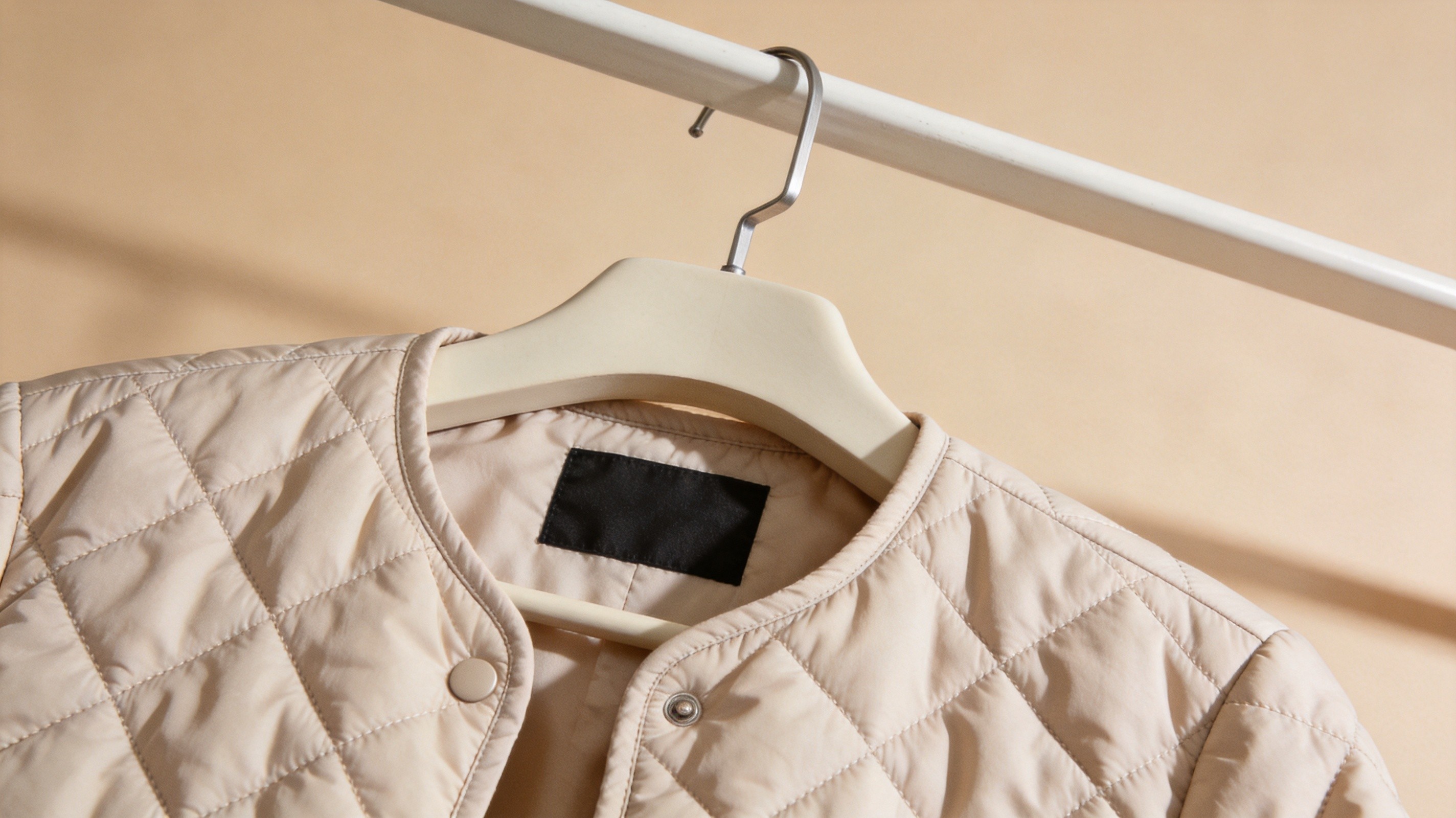
Apparel (40–45% of market)
- Jackets & Vests: Puffer jackets, quilted vests, bomber jackets, trench coat liners. Diamond and square patterns dominate. Filling GSM 80–150 for lightweight, 150–250 for mid-weight warmth.
- Blazers & Overshirts: Quilted blazers are a growing trend in smart-casual fashion. Diamond quilting at 100–120 GSM total for subtle texture without bulk.
- Skirts & Dresses: Quilted A-line skirts and shift dresses use lightweight quilting (80–120 GSM total) with cotton face for structure.
- Accessories: Quilted tote bags, bucket hats, headbands, and scarves. Often uses square or dot patterns.
Home Textiles (30–35% of market)
- Bedspreads & Coverlets: Feather, wave, and geometric patterns. Higher GSM (200–400) for warmth and visual luxury.
- Throw Blankets: Medium weight (150–250 GSM), decorative patterns, often with printed face fabric.
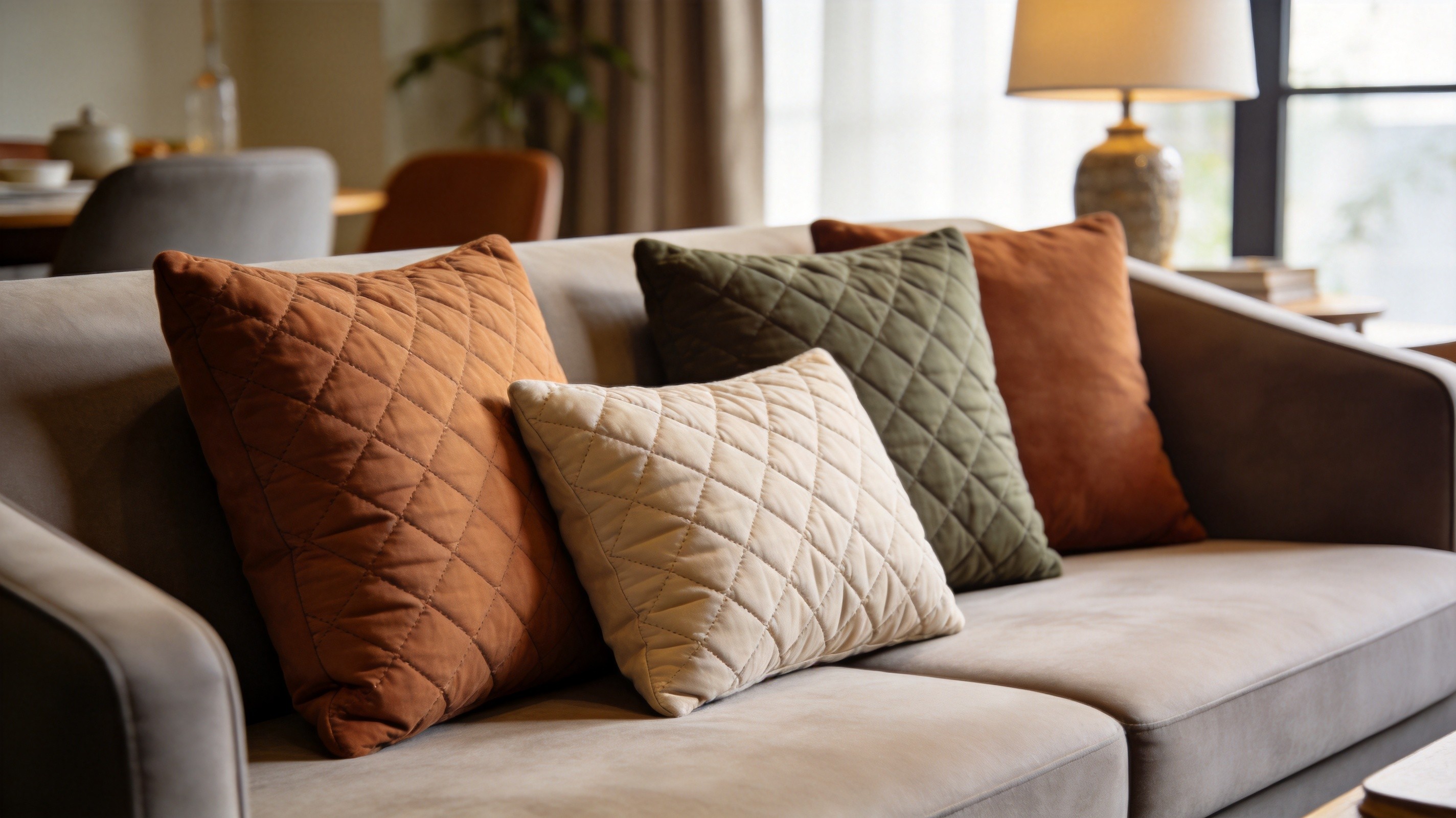
- Cushion & Pillow Covers: Square, diamond, or dot patterns. 120–200 GSM for decorative cushions, heavier for floor cushions.
- Table Runners & Placemats: Lightweight (80–120 GSM), heat resistance from cotton, and decorative appeal.
Craft & Hobby (15–20% of market)
- Patchwork Quilting: Pre-quilted cotton squares sold to quilting hobbyists. Square and dot patterns most popular.
- DIY Projects: Cosmetic bags, phone cases, book covers, and fabric boxes.
- Seasonal Decorations: Christmas stockings, Easter baskets, Halloween decorations.
Industrial & Specialty (5–10% of market)
- Packaging: Quilted cotton gift boxes, wine bottle bags, jewelry pouches.
- Pet Textiles: Quilted pet beds, crate liners, and carriers.
- Medical: Quilted cotton padding for braces, supports, and prosthetic liners (requires specific certifications).
Pricing & MOQ: Real FOB Numbers from Keqiao
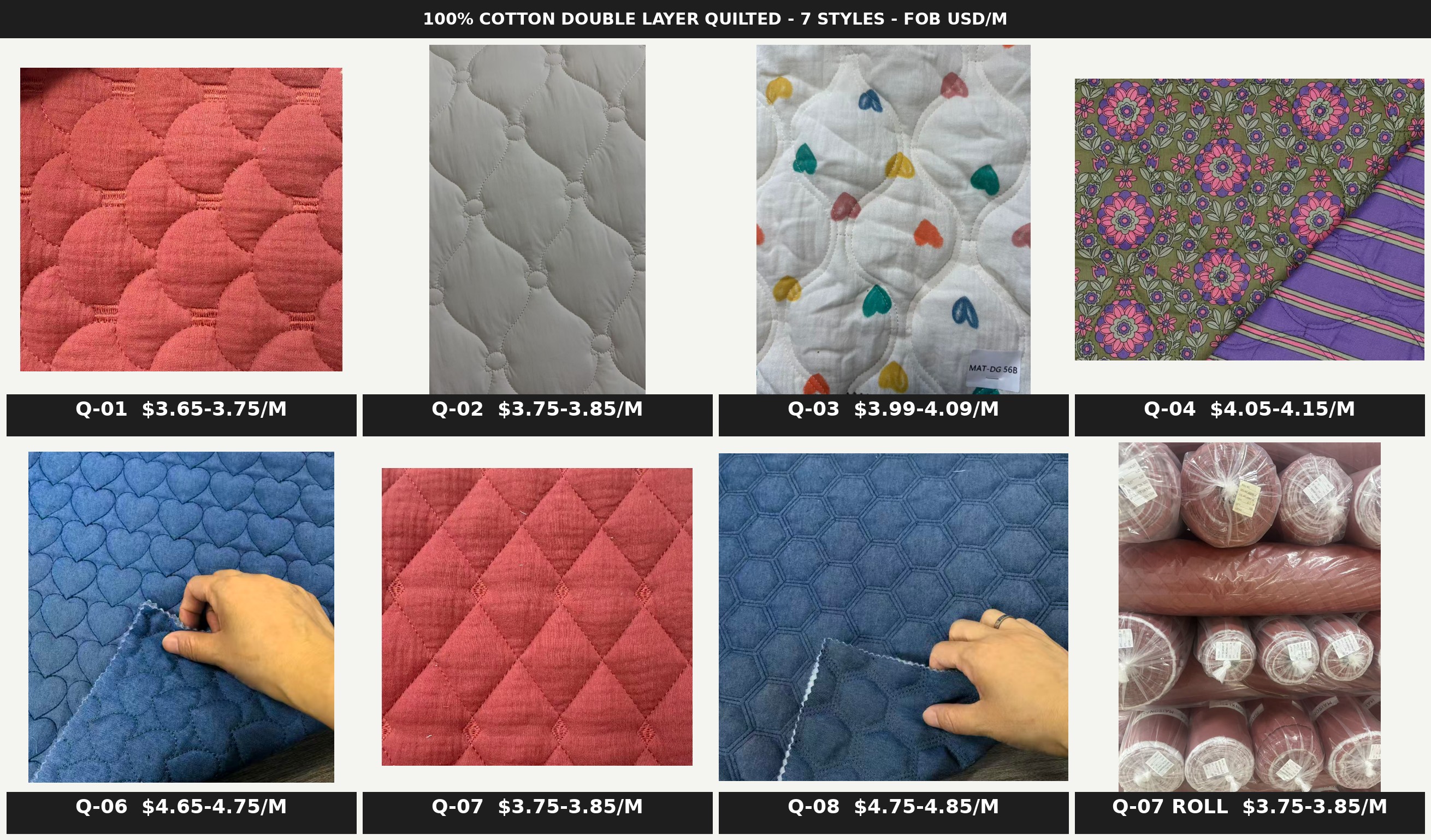
Quilted cotton fabric pricing depends on five variables: pattern complexity, filling GSM, cotton content, finishing treatment, and order volume. Here's the actual pricing structure from our Zhuji workshop:
| Category | Total GSM | Pattern | Cotton Content | FOB Price (per meter) | MOQ |
|---|---|---|---|---|---|
| Basic Square | 120–180 GSM | Square/Channel | 100% cotton face | US $1.50 – $1.80 | 1,000m/color |
| Standard Diamond | 150–220 GSM | Diamond | 100% cotton face | US $1.80 – $2.30 | 1,000m/color |
| Premium Dot | 150–250 GSM | Dot/Circle | 100% cotton face | US $2.00 – $2.60 | 1,000m/color |
| Heavy-Duty Square | 250–350 GSM | Square/Diamond | 100% cotton face | US $2.50 – $3.20 | 1,000m/color |
| Decorative Wave/Feather | 150–300 GSM | Wave/Feather | 100% cotton face | US $2.80 – $3.50 | 1,000m/color |
| Custom Geometric | 150–350 GSM | Custom design | 100% cotton face | US $3.00 – $4.00 | 2,000m/design |
What Drives the Price
| Cost Factor | Impact | Typical Range |
|---|---|---|
| Filling GSM increase | Higher | +$0.10–0.30/m per 50 GSM increase |
| Pattern complexity (stitch count) | Higher | +$0.20–0.80/m for complex vs. basic patterns |
| Organic cotton face | Significantly higher | +30–50% over conventional cotton |
| Special finishes (water-resistant, anti-static) | Moderate | +$0.15–0.40/m |
| Volume (5,000m+ vs. 1,000m) | Lower per meter | -5–12% discount at scale |
| Custom color dyeing | Moderate | +$0.10–0.25/m for non-stock colors |
MOQ Strategy
The standard 1,000-meter MOQ exists because quilting machines require pattern-specific setup (stitch cam programming, thread loading, tension adjustment). Once set up, running 1,000m vs. 500m barely changes the per-meter cost — but the setup cost is fixed.
How to reduce your effective MOQ:
- Choose stock patterns: We maintain 15+ pre-set patterns in grey fabric. Ordering from these eliminates setup charges and can reduce MOQ to 500m.
- Consolidate colors: If you need 3 colorways of the same pattern, the total 3,000m runs efficiently even if each color is only 1,000m.
- Accept similar constructions: If your competitor orders the same pattern in navy, you can join their production run and get the larger-batch price for your 1,000m.
Quality Testing Standards: What to Require
Quilted cotton fabric must pass several tests to ensure it performs reliably in the end application. Here's the complete testing checklist:
| Test | Standard | Acceptable Result | Why It Matters |
|---|---|---|---|
| Bonding / Peel Strength | ISO 8185 / ASTM D751 | ≥80N per 5cm width | Prevents layer separation after washing and use |
| Shrinkage | AATCC 135 (3 home washes) | ≤3% warp, ≤2% weft | Critical for pattern cutting accuracy and garment fit |
| Colorfastness to Washing | ISO 105-C06 | Grade 4+ | Color retention after home laundering |
| Colorfastness to Rubbing | ISO 105-X12 | Grade 4+ dry, Grade 3+ wet | Prevents color transfer to other fabrics |
| Dimensional Stability of Quilting | Internal method | Pattern distortion ≤5% after 5 washes | Quilting pattern should not warp or pucker after washing |
| Tensile Strength | ISO 13934-1 | Warp ≥200N, Weft ≥150N | Ensures seam and fabric durability |
| Filling Weight Uniformity | Cut-and-weigh (5 samples across width) | ±10% of specified GSM | Prevents cold spots or uneven loft |
| Pilling Resistance | ISO 12945-2 (Martindale) | Grade 3+ after 20,000 cycles | Cotton face should resist pilling with regular use |
| Stitch Density | Visual count | As specified (±1 stitch/inch) | Too few stitches = filling migration; too many = stiff hand |
The Wash Test That Catches 80% of Problems
Before approving bulk production, always request a 3-cycle wash test on a 50cm × 50cm sample. Wash at the temperature specified for the end use (typically 40°C for garments, 60°C for home textiles), tumble dry, then inspect for:
- Layer separation or bubbling → bonding failure
- Filling migration or clumping → uneven quilting density
- Pattern distortion → excessive shrinkage or tension imbalance
- Color bleeding → insufficient colorfastness
- Stitch breakage → poor thread quality or needle damage
Sourcing Quilted Cotton from Keqiao, China
Keqiao (绍兴柯桥), located in Shaoxing, Zhejiang Province, is the world's largest textile trading hub. For quilted cotton fabric specifically, the advantages are significant:
| Advantage | Details |
|---|---|
| 50+ quilting mills | Within a 30km radius, offering every pattern type and GSM range |
| Complete supply chain | Cotton yarn suppliers, weaving mills, dye houses, quilting workshops, finishing plants — all local |
| 48-hour samples | Stock patterns can ship within 2 days; custom patterns within 5 days |
| Competitive pricing | Cluster effect keeps costs 15–25% below isolated mills in other provinces |
| China Textile City | The world's largest physical textile market — 30,000+ shops, walk-in sourcing |
| Export infrastructure | Ningbo and Shanghai ports within 2 hours; established freight forwarders for every market |
| Flexible MOQ | Competition among mills means many offer lower MOQs than other textile regions |
Common Sourcing Mistakes
- Specifying only total GSM: Without layer-by-layer breakdown, you'll receive inconsistent fabric between orders. Always specify face GSM, fill GSM, and backing GSM separately.
- Ignoring the backing fabric: Some suppliers cut costs by using thin non-woven backing instead of woven cotton. This degrades wash durability and hand feel. Specify "woven backing" explicitly.
- Not testing bonding strength: Two layers can look bonded but separate after one wash. Always require peel strength test results before approving bulk.
- Overlooking filling migration: If quilting pockets are too large (pattern spacing too wide), the polyester filling shifts inside, creating lumpy patches. Specify maximum pocket size based on filling GSM.
- Forgetting shrinkage compatibility: The cotton face, poly filling, and cotton backing all shrink at different rates. If your supplier doesn't pre-shrink or balance the layers, the fabric will curl or pucker after washing.
Why Choose Mujia Textile for Quilted Cotton
Mujia Textile is a Zhuji-based fabric supplier specializing in cotton textiles including quilted cotton. Here's what we bring to the table:
| Location | No. 1818 Qiaobei Road, Keqiao District, Shaoxing 312030 (Showroom) / No.5 Wencang Road, Fengqiao Town, Zhuji, Zhejiang 311811, China (Factory) |
| Quilting Patterns | 7 standard patterns + custom design capability |
| GSM Range | 120–450 GSM total (adjustable per layer) |
| Width | 145cm / 150cm / 155cm (custom widths available) |
| MOQ | 1,000 meters per color/pattern |
| FOB Pricing | US $1.50 – $4.00/meter depending on spec |
| Lead Time | 15–20 days after sample approval and deposit |
| Quality Testing | Full test reports available (bonding strength, shrinkage, colorfastness) |
| Payment Terms | 30% deposit, 70% against B/L copy |
| Free Services | Free swatch cards, free lab dips (first 3 colors), free pre-shipment samples |
Our Process: From Inquiry to Delivery
- Inquiry received → We confirm pattern, GSM, width, composition, color, and quantity within 24 hours
- Swatch card sent → Free physical samples of available patterns shipped worldwide (3–7 days)
- Lab dips approved → Color lab dips under D65 standard light, first 3 colors free
- Pre-production sample → Full-width sample with exact specs for your approval before bulk
- Bulk production → 15–20 days production with inline quality checks
- Inspection & shipping → Pre-shipment inspection report, photos, and video. FOB Ningbo/Shanghai or CIF your port.
Final Checklist: Before You Order Quilted Cotton Fabric
- Confirmed quilting pattern (square, diamond, dot, wave, feather, geometric, or plain)
- Specified each layer's GSM separately (face / filling / backing)
- Confirmed width matches your pattern cutting layout
- Physical sample received and approved (including wash test)
- Color lab dip approved under D65 standard light
- Bonding strength test results received (≥80N/5cm)
- Shrinkage test results received (≤3% warp, ≤2% weft)
- MOQ confirmed in writing (per color, per pattern)
- Payment terms agreed (30% deposit, 70% against B/L)
- Third-party inspection arranged for first order
- Certification requirements confirmed (OEKO-TEX, GOTS if needed)
- Lead time confirmed (15–20 days production + shipping)
This guide is written by Mujia Textile, a cotton textile manufacturer and quilted fabric supplier based in Zhuji, Zhejiang, China. We produce seven quilting patterns with FOB prices from US $1.50–$4.00/meter and MOQ from 1,000 meters per design. All specifications in this article reflect our actual production standards and can be verified by requesting samples.
Questions about quilted cotton fabric sourcing?
Send us your specifications — pattern, GSM, width, quantity — and we'll provide a detailed quotation within 24 hours. Free swatch cards with all 7 patterns shipped worldwide at no charge.
Contact Mujia Textile →